Address
Durganagar, Italgacha, Kokata-700079


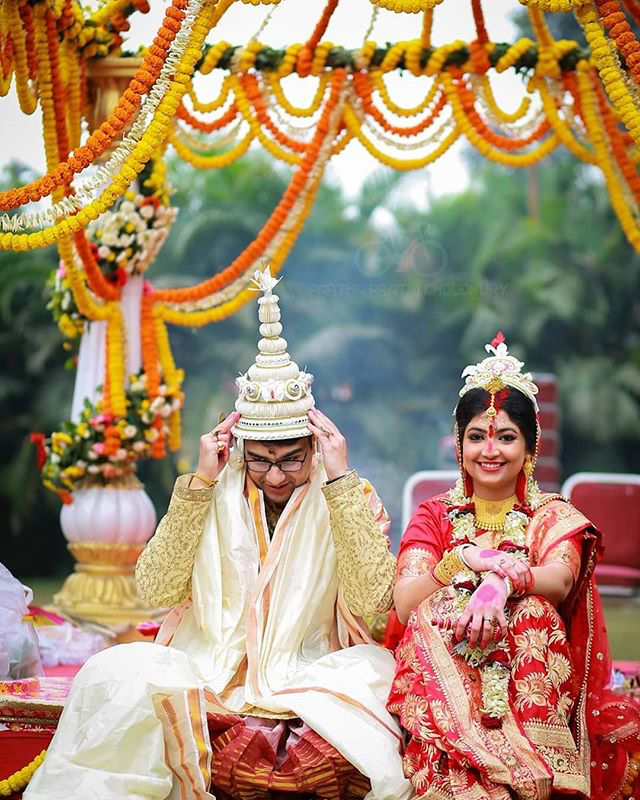
Bengali weddings are a grand celebration of love, tradition, and culture. Rooted in rich history, these weddings are known for their vibrant rituals, colorful attire, and delicious cuisine. If you’re curious about what makes a Bengali wedding special, let’s take a delightful journey through the main events and customs.
Pre-Wedding Rituals
1. Aashirwad (Blessings Ceremony):
The bride and groom’s families exchange gifts and blessings. This ceremony marks the formal acceptance of the couple by both families.
2. Aiburo Bhaat (Last Meal as a Bachelor/Bachelorette):
Before the wedding day, the bride and groom enjoy a special feast at their respective homes. Family and friends gather to celebrate and indulge in traditional Bengali dishes.
The Wedding Day
3. Bor Jatri (Groom’s Procession):
The groom arrives at the bride’s house with his family and friends in a lively procession. This event is filled with music, dance, and joyous celebrations.
4. Saat Paak (Seven Circles):
The bride is carried by her brothers and circumambulates the groom seven times. This symbolizes their union and commitment to each other.
5. Subho Drishti (Auspicious Glance):
The bride and groom exchange glances for the first time during the ceremony. It’s a moment filled with excitement and emotion as they look into each other’s eyes.
6. Mala Badal (Exchange of Garlands):
The couple exchanges flower garlands, signifying their acceptance of each other as life partners.
7. Sampradan (Giving Away of the Bride):
The bride’s father or a guardian gives her hand to the groom, symbolizing the transfer of responsibility and trust.
8. Saptapadi (Seven Steps):
The couple takes seven steps together, each step representing a vow they make to each other, promising to be together in joy and sorrow.
Post-Wedding Rituals
9. Basar Ghar (Night Ceremony):
The newlyweds spend their first night together at the bride’s house, surrounded by family members who playfully tease and interact with them.
10. Bou Bhaat (Bride’s Reception):
The bride is introduced to the groom’s extended family and friends. She serves a special meal to everyone, signifying her acceptance and role in her new family.
11. Bashi Biye (Second Day of Marriage):
On the second day, the couple continues to perform various rituals, and the wedding celebrations come to a joyful conclusion.
Bengali Wedding Attire
For the Bride:
The bride typically wears a red or maroon Banarasi saree adorned with gold embroidery. She is decked with traditional jewelry, including the Shankha (conch shell bangles) and Pola (red coral bangles). Her forehead is decorated with white and red patterns called Chandan.
For the Groom:
The groom wears a silk dhoti and kurta, often in shades of white or cream. He also dons a traditional topor (a conical headgear) made of sholapith, adding a regal touch to his appearance.
Culinary Delights
No Bengali wedding is complete without a sumptuous feast. The menu includes a variety of mouth-watering dishes such as:
- Fish Preparations: Hilsa (ilish) and Prawns (chingri) are must-haves.
- Meat Dishes: Mutton curry and chicken preparations are popular.
- Sweets: Rosogolla, Sandesh, and Mishti Doi (sweet yogurt) are served to satisfy the sweet tooth.
Conclusion
Bengali weddings are a beautiful amalgamation of tradition, culture, and love. Each ritual is a celebration of family bonds, mutual respect, and joyous beginnings. Whether you are attending a Bengali wedding or planning one, understanding these customs will enhance your appreciation of this vibrant and colorful celebration.
Join us in celebrating the beauty of Bengali weddings and the rich heritage they bring to the Indian cultural tapestry.